Vem daterade Barbara Villiers, hertiginna av Cleveland?
John Churchill, 1st Duke of Marlborough daterad Barbara Villiers, hertiginna av Cleveland från ? till ?. Åldersskillnaden var 9 år, 6 månader och 9 dagar.
Karl II av England daterad Barbara Villiers, hertiginna av Cleveland från till . Åldersskillnaden var 10 år, 5 månader och 19 dagar.
Barbara Villiers, hertiginna av Cleveland
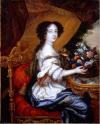
Barbara Villiers, grevinna av Castlemaine och hertiginna av Cleveland, född i november 1640, död 9 oktober 1709, var en engelsk hovdam, mätress till Karl II av England åren 1660–1673.
Barbara Villiers hade under sin tid som mätress så stort inflytande att hon kallades "Englands okrönta drottning". Hon var känd för sin stora skönhet men också för sin extravagans och girighet och kallades av John Evelyn för "nationens förbannelse".
Läs mer...John Churchill, 1st Duke of Marlborough
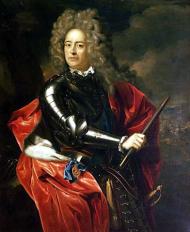
John Churchill, från 1702 hertig av Marlborough, född 26 maj 1650 på Ashe House nära Musbury i Devon, död 16 juni 1722 på Windsor Lodge vid Windsor Castle i Berkshire, var en engelsk militär och politiker (ursprungligen tory, men periodvis istället stöttad av whigs). År 1685 blev han utnämnd till generalmajor. Churchill gifte sig 1678 med Sarah Jennings.
Han hade dessutom följande titlar: Captain-general (överbefälhavare), baron Churchill av Sandridge, lord Churchill av Eyemouth, riddare av Strumpebandsorden, medlem av kronrådet, furste av Heliga romerska riket av tysk nation samt riksfurste av Mindelheim.
Marlboroughs militära karriär, baserad på strategiskt snille och administrativ skicklighet, är en av de mest framstående i Storbritanniens historia. Han utmärkte sig speciellt i det spanska tronföljdskriget. Den roll han spelade i den ärorika revolutionen, där han förrådde sin välgörare Jakob II har å andra sidan kritiserats som ett själviskt svek. Hans ättling sir Winston Churchill skrev om honom att han ”aldrig utkämpat ett slag som han inte vunnit, och aldrig belägrat en stad som han inte tog.”
Hans ättlingar bebor fortfarande det storslagna slottet Blenheim Palace som han lät färdigställa åt sig själv.
Läs mer...Barbara Villiers, hertiginna av Cleveland
Karl II av England

Charles II (29 May 1630 – 6 February 1685) was King of Scotland from 1649 until 1651 and King of England, Scotland, and Ireland from the 1660 Restoration of the monarchy until his death in 1685.
Charles II was the eldest surviving child of Charles I of England, Scotland and Ireland and Henrietta Maria of France. After Charles I's execution at Whitehall on 30 January 1649, at the climax of the English Civil War, the Parliament of Scotland proclaimed Charles II king on 5 February 1649. However, England entered the period known as the English Interregnum or the English Commonwealth with a republican government eventually led by Oliver Cromwell. Cromwell defeated Charles II at the Battle of Worcester on 3 September 1651, and Charles fled to mainland Europe. Cromwell became Lord Protector of England, Scotland and Ireland. Charles spent the next nine years in exile in France, the Dutch Republic and the Spanish Netherlands. A political crisis after Cromwell's death in 1658 resulted in the restoration of the monarchy in 1660, and Charles was invited to return to Britain. On 29 May 1660, his 30th birthday, he was received in London to public acclaim.
Charles's English Parliament enacted the Clarendon Code, to shore up the position of the re-established Church of England. Charles acquiesced to these new laws even though he favoured a policy of religious tolerance. The major foreign policy issue of his early reign was the Second Anglo-Dutch War. In 1670, he entered into the Treaty of Dover, an alliance with his cousin, King Louis XIV of France. Louis agreed to aid him in the Third Anglo-Dutch War and pay him a pension, and Charles secretly promised to convert to Catholicism at an unspecified future date. Charles attempted to introduce religious freedom for Catholics and Protestant dissenters with his 1672 Royal Declaration of Indulgence, but the English Parliament forced him to withdraw it. In 1679, Titus Oates's fabrication of a supposed Popish Plot sparked the Exclusion Crisis when it was revealed that Charles's brother and heir presumptive, James, Duke of York, had become a Catholic. The crisis saw the birth of the pro-exclusion Whig and anti-exclusion Tory parties. Charles sided with the Tories and, after the discovery of the Rye House Plot to murder Charles and James in 1683, some Whig leaders were executed or forced into exile. Charles dissolved the English Parliament in 1681 and ruled alone until his death in 1685.
A patron of the arts and sciences, Charles became known for his affability and friendliness, and for allowing his subjects easy access to his person. But he also showed an almost impenetrable reserve, especially concerning his political agendas. His court gained a reputation for moral laxity. Charles's marriage to Catherine of Braganza produced no surviving children, but the king acknowledged at least 12 illegitimate children by various mistresses. He was succeeded by his brother James.
Läs mer...