Vem daterade Berthe de Courrière?
Auguste Clésinger daterad Berthe de Courrière från ? till ?. Åldersskillnaden var 37 år, 7 månader och 10 dagar.
Rémy de Gourmont daterad Berthe de Courrière från ? till ?. Åldersskillnaden var 5 år, 10 månader och 3 dagar.
Georges Ernest Boulanger daterad Berthe de Courrière från ? till ?. Åldersskillnaden var 15 år, 1 månader och 3 dagar.
Berthe de Courrière

Berthe de Courrière (June 1852, Lille – 14 June 1916, Paris) was a French artists' model and demimondaine. She was the mistress, model, and heir of the sculptor and painter Auguste Clésinger.
Läs mer...Auguste Clésinger
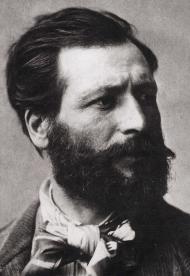
Jean-Baptiste Auguste Clésinger (22 October 1814 – 5 January 1883) was a 19th-century French sculptor and painter.
Läs mer...Berthe de Courrière
Rémy de Gourmont

Rémy de Gourmont, född den 4 april 1858, död den 27 september 1915, var en fransk författare.
Gourmont blev mest känd som symbolismens estetiker och en snabbsynt kulturkrönikör i tidskriften Mercure de France från 1888. Han uppträdde även som en mycket produktiv författare inom de mest vitt skilda områden. Gourmont debuterade först som romanförfattare med Merlette (1886), som följdes av Sixtine (1890), Les chevaux de Diomède (1897), Une nuit au Luxembourg (1906), Un cœr virginal (1907) och novellsamlingarna Histories magiques (1894), Le pélérin du silence (1896), D'un pays lointain (1898), samt Couleurs (1908). Därutöver har han utgett ett häfte lyrik samt ett par dramatiska arbeten. Sin väsentliga gärning nedlade han dock som litteraturkritiker med arbeten som Le livre de masques (2 band, 1896-98) och Promenades littéraires (5 serier, 1904-13 och två postuma), som estekiker med arbeten som La culture des idées (1900), Le chiemin de velours (1902), samt som kulturfilosof med arbeten som Promenades philosophiques (3 serier 1905-09) och Épilogues (4 serier, publicerade i Mercure de France 1895-1912, utgivna 1903-13).
Läs mer...Berthe de Courrière
Georges Ernest Boulanger
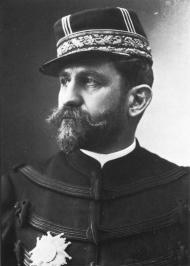
Georges Ernest Jean-Marie Boulanger (29 April 1837 – 30 September 1891), nicknamed Général Revanche ("General Revenge"), was a French Army officer and politician. An enormously popular public figure during the second decade of the Third Republic, he won multiple elections. At the zenith of his popularity in January 1889, he was feared to be powerful enough to establish himself as dictator. His base of support was the working-class districts of Paris and other cities, plus rural traditionalist Catholics and royalists. He advocated revanche (revenge on Germany), révision (revision of the constitution), and restauration (restoration of the monarchy).
The elections of September 1889 marked a decisive defeat for the Boulangists. Changes in the electoral laws prevented Boulanger from running in multiple constituencies and the aggressive opposition of the established government, combined with Boulanger's self-imposed exile, contributed to a rapid decline of the movement. The decline of Boulanger severely undermined the political strength of the conservative and royalist elements of French political life; they would not recover strength until the establishment of the Vichy regime in 1940. The defeat of the Boulangists ushered in a period of political dominance by the Moderate Republicans.
Academics have attributed the failure of the movement to Boulanger's own weaknesses. Despite his charisma, he lacked coolness, consistency, and decisiveness; he was a mediocre leader who lacked vision and courage. He was never able to unite the disparate elements, ranging from the far left to the far right, that formed the base of his support. He was able, however, to frighten republicans and force them to reorganize and strengthen their solidarity in opposition to him.
Läs mer...