Vem daterade George Sand?
Alfred de Musset daterad George Sand från ? till ?. Åldersskillnaden var 6 år, 5 månader och 10 dagar.
Félicien Mallefille daterad George Sand från ? till ?. Åldersskillnaden var 8 år, 10 månader och 2 dagar.
Jules Sandeau daterad George Sand från ? till ?. Åldersskillnaden var 6 år, 7 månader och 18 dagar.
Prosper Mérimée daterad George Sand från ? till ?. Åldersskillnaden var 0 år, 9 månader och 3 dagar.
Victor Borie daterad George Sand från ? till ?. Åldersskillnaden var 14 år, 2 månader och 10 dagar.
Alexandre Manceau daterad George Sand från ? till ?. Åldersskillnaden var 12 år, 10 månader och 2 dagar.
Louis-Chrysostome Michel daterad George Sand från till . Åldersskillnaden var 6 år, 8 månader och 1 dagar.
Frédéric Chopin daterad George Sand från till . Åldersskillnaden var 5 år, 8 månader och 0 dagar.
George Sand

Amantine Lucile Aurore Dupin, mer känd under pseudonymen George Sand (uttal: [sɑ̃:d]), född 1 juli 1804 i Paris, död 8 juni 1876 i Nohant-Vic, var en fransk författare. Hon är bland annat känd för att starkt ha gått emot 1800-talets kvinnosyn.
Läs mer...Alfred de Musset
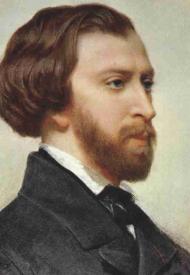
Alfred Louis Charles de Musset-Pathay (French: [alfʁɛd də mysɛ]; 11 December 1810 – 2 May 1857) was a French dramatist, poet, and novelist. Along with his poetry, he is known for writing the autobiographical novel La Confession d'un enfant du siècle (The Confession of a Child of the Century).
Läs mer...George Sand
Félicien Mallefille

Jean Pierre Félicien Mallefille, född den 3 maj 1813 på Mauritius, död den 24 november 1868 i Bougival, var en fransk författare.
Mallefille fick sin bildning i Paris och vann tidigt framgång med dramer och romaner. Bland de förra märks Glenarvon (1835), Le paysan des alpes (1837; "Fiat justitia!", uppförd 1853) samt lustspelen Le coeur et la dôt (1852; "Kärlek och pengar", uppförd 1853) och Les sceptiques (1867). Av hans romaner kan nämnas Le collier (1845), Les mémoires de Don Juan (1852) och La confession du Guacho (1868). Han var 1848-49 chargé d'affaires i Lissabon.
Läs mer...George Sand
Jules Sandeau
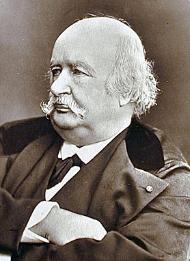
Léonard Sylvain Jules Sandeau, född 19 februari 1811 i Aubusson, död 24 april 1883 i Paris, var en fransk författare och skriftställare.
Sandeau fördes in på författarbanan av Aurore Dudevant, med vilken han stod i personlig och litterär förbindelse. Hennes pseudonym George Sand framgick ur denna förbindelse. De utgav nämligen tillsammans under pseudonymen Jules Sand en roman, Rose et Blanche (1831; svensk översättning "Rosa och Blenda", 1839). Efter det skrev Sandeau ett stort antal romaner och noveller, bland vilka kan nämnas Madame de Sommerville (1834), Marianne (1839), där han tecknat George Sand, Le docteur Herbeau (1841), Vaillance et Richard (1843), Fernand (1844), Catherine (1845), Valcreuse (1846), Mille de la Seiglière (1848; kanske hans mästerverk), Madeleine (1848), La chasse au roman (1849), Un héritage (1850), Sacs et parchemins (1851), La maison de Penarvan (1858), Un debut dans la magistrature (1862), La roche aux mouettes (1871) och Jean de Thommeray (1873). Tillsammans med Émile Augier skrev Sandeau för teatern La pierre de touche (1854; "Pröfvostenen", 1856) och Le gendre de monsieur Poirier (1854; "Klädeshandlaren och hans måg", 1855). Dessutom omarbetade han tillsammans med Augier flera av sina romaner för teatern. Av dessa hade särskilt Mademoiselle de la Seiglière (1851) lysande framgång och höll sig populär på den franska repertoaren och på andra ställen in på 1900-talet. År 1858 blev Sandeau ledamot av Franska akademien.
Läs mer...George Sand
Prosper Mérimée
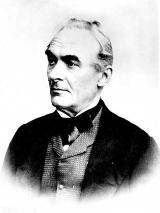
Prosper Mérimée (French: [pʁɔspɛʁ meʁime]; 28 September 1803 – 23 September 1870) was a French writer in the movement of Romanticism, one of the pioneers of the novella, a short novel or long short story. He was also a noted archaeologist and historian, an important figure in the history of architectural preservation. He is best known for his novella Carmen, which became the basis of Bizet's opera Carmen. He learned Russian, a language for which he had great affection, before translating the work of several notable Russian writers, including Pushkin and Gogol, into French. From 1830 until 1860 he was the inspector of French historical monuments, responsible for the protection of many historic sites, including the medieval citadel of Carcassonne and the restoration of the façade of the cathedral of Notre-Dame de Paris. Along with the writer George Sand, he discovered the series of tapestries called The Lady and the Unicorn, arranging for their preservation. He was instrumental in the creation of Musée national du Moyen Âge in Paris, where the tapestries now are displayed. The official database of French monuments, the Base Mérimée, bears his name.
Läs mer...George Sand
Victor Borie

Victor Borie, né le à Tulle et mort le à Paris 6e, est un journaliste français.
Läs mer...George Sand
Alexandre Manceau
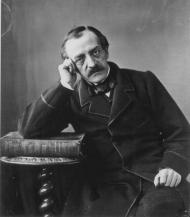
Alexandre Manceau, né à Trappes le et mort à Palaiseau le , est un graveur et auteur dramatique français.
Läs mer...George Sand
Louis-Chrysostome Michel
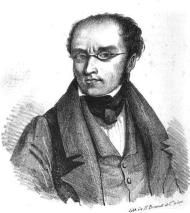
Louis-Chrysostome Michel, dit Michel de Bourges, né à Pourrières (Var) en 1797 et mort à Montpellier en 1853, est un avocat et homme politique français.
Läs mer...George Sand
Frédéric Chopin

Frédéric François Chopin (born Fryderyk Franciszek Chopin; 1 March 1810 – 17 October 1849) was a Polish composer and virtuoso pianist of the early Romantic period who wrote primarily for solo piano. He has maintained worldwide renown as a leading composer of his era whose "poetic genius was based on a professional technique that was without equal in his generation".
Chopin was born in Żelazowa Wola and grew up in Warsaw, which in 1815 became part of Congress Poland. A child prodigy, he completed his musical education and composed his early works in Warsaw before leaving Poland at age 20, less than a month before the outbreak of the November 1830 Uprising; at 21, he settled in Paris. Thereafter he gave only 30 public performances, preferring the more intimate atmosphere of the salon. He supported himself by selling his compositions and giving piano lessons, for which he was in high demand. Chopin formed a friendship with Franz Liszt and was admired by many musical contemporaries, including Robert Schumann. After a failed engagement to Maria Wodzińska from 1836 to 1837, he maintained an often troubled relationship with the French writer Aurore Dupin (known by her pen name George Sand). A brief and unhappy visit to Mallorca with Sand in 1838–39 proved one of his most productive periods of composition. In his final years he was supported financially by his admirer Jane Stirling. In poor health most of his life, Chopin died in Paris in 1849 at age 39.
All of Chopin's compositions feature the piano. Most are for solo piano, though he also wrote two piano concertos before leaving Warsaw, some chamber music, and 19 songs set to Polish lyrics. His piano pieces are technically demanding and expanded the limits of the instrument; his own performances were noted for their nuance and sensitivity. Chopin's major piano works include mazurkas, waltzes, nocturnes, polonaises, the instrumental ballade (which Chopin created as an instrumental genre), études, impromptus, scherzi, preludes, and sonatas, some published only posthumously. Among the influences on his style of composition were Polish folk music, the classical tradition of Mozart and Schubert, and the atmosphere of the Paris salons, of which he was a frequent guest. His innovations in style, harmony, and musical form, and his association of music with nationalism, were influential throughout and after the late Romantic period.
Chopin's music, his status as one of music's earliest celebrities, his indirect association with political insurrection, his high-profile love life, and his early death have made him a leading symbol of the Romantic era. His works remain popular, and he has been the subject of numerous films and biographies of varying historical fidelity. Among his many memorials is the Fryderyk Chopin Institute, which was created by the Polish parliament to research and promote his life and works, and which hosts the prestigious International Chopin Piano Competition, devoted entirely to his works.
Läs mer...