Vem daterade Julia Chinn?
Richard Mentor Johnson daterad Julia Chinn från ? till ?.
Julia Chinn
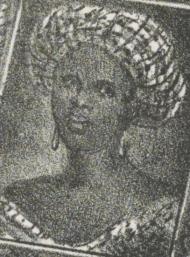
Julia Chinn, född omkring 1790 i Scott County i Kentucky i USA, död 1833, var en plantagerättare och slav, som var maka i ett samvetsäktenskap med plantageägaren och politikern Richard Mentor Johnson.
Hon föddes som slav till Robert Johnson på dennes plantage Blue Springs nordväst om Great Crossings. När Robert Johnson dog 1815, ärvdes hon av dennes son Richard Johnson. Hon fick en borgerlig uppfostran i det Johnsonska hemmet av Robert Johnssons fru Jemina, inklusive i skrivning och pianospel. Hon döptes först i vuxen ålder 1828 i Great Crossing Baptist Church.
Richard Johnson kunde inte legalt gifta sig med Julia Chinn, som han hade en relation med från 1811, därför att hon var slav, men paret levde i samvetsäktenskap under 22 år tills Julia Chinn dog. Paret bodde tillsammans i plantagens huvudbyggnad, en tvåvånings tegelhus. Under Richard Johnsons årliga halvårslånga perioder i Washington D.C. från 1819 till 1828 för att sköta sitt politiska ämbete som senator i Senaten var hon ansvarig för att sköta plantagen och ekonomin. Hon förblev dock slav hela sitt liv.
Plantagen besöktes 1825 av Marquis de Lafayette under dennes resa till USA som "nationens gäst". Julia Chinn stod då som värdinna för en av henne arrangerad stor mottagning på plantagen.
Julia Chinn skötte den medicinska kliniken på indianinternatskolan Choctaw Academy, som låg på Blue Springs. Skolan drabbades av kolera 1833 under den andra kolerapandemin, varvid Julia Chinn smittades och dog.
Paret Johnson–Chinn hade döttrarna Adeline Chinn Johnson (född 1812) och Imogene Chinn Johnson, som också föddes som slavar men bar faderns efternamn och frigavs. De fick också en gedigen borgerlig uppfostran och gick bland annat som dagelever på den välrenommerade Choctaw Academy mot särskild ersättning.
Läs mer...Richard Mentor Johnson
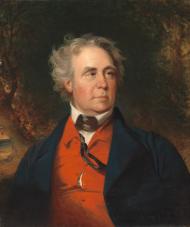
Richard Mentor Johnson (October 17, 1780 – November 19, 1850) was an American lawyer, military officer and politician who served as the ninth vice president of the United States from 1837 to 1841 under President Martin Van Buren. He is the only vice president elected by the United States Senate under the provisions of the Twelfth Amendment. Johnson also represented Kentucky in the U.S. House of Representatives and Senate. He began and ended his political career in the Kentucky House of Representatives.
After two years in the Kentucky House, Johnson was elected to the U.S. House in 1806. He allied with fellow Kentuckian Henry Clay as a member of the War Hawks faction that favored war with Britain in 1812. At the outset of the War of 1812, Johnson was commissioned a colonel in the Kentucky Militia and commanded a regiment of mounted volunteers from 1812 to 1813. He and his brother James served under William Henry Harrison in Upper Canada. Johnson led troops in the Battle of the Thames. Many reported that he personally killed the Shawnee chief Tecumseh, a claim that he later used to his political advantage.
After the war, Johnson returned to the House of Representatives. The state legislature appointed him to the Senate in 1819 to fill the seat vacated by John J. Crittenden. With his increasing prominence, Johnson was criticized for his interracial relationship with Julia Chinn, a mixed-race slave who was classified as octoroon (or seven-eighths white). Unlike other upper-class planters and leaders who had African-American mistresses or concubines, but never acknowledged them, Johnson treated Chinn as his common law wife. He acknowledged their two daughters as his children, giving them his surname, much to the consternation of some of his constituents. It is believed that because of this, the state legislature picked another candidate for the Senate in 1828, forcing Johnson to leave in 1829, but his Congressional district voted for him and returned him to the House the same year.
In the 1836 election, Johnson was the Democratic nominee for vice-president on a ticket with Martin Van Buren. Campaigning with the slogan "Rumpsey Dumpsey, Rumpsey Dumpsey, Colonel Johnson killed Tecumseh", Johnson fell one short of the electoral votes needed to secure his election. Virginia's delegation to the Electoral College refused to endorse Johnson, voting instead for William Smith of South Carolina. The Senate elected him to the vice-presidential office. Due to his relationships with several Black or mixed-race women, including his common-law wife Julia Chinn, Johnson proved such a burden for the Democrats in the 1836 election that they refused to renominate him for vice president in 1840. Van Buren campaigned for reelection without a running mate. He lost to William Henry Harrison, a Whig. Johnson then served two more years in the Kentucky House of Representatives. He tried to return to higher office but was defeated. He finally was elected to the Kentucky House in 1850, but died on November 19, 1850, just two weeks into his term.
Läs mer...